

Why Commercial Drains at Christmas Come Under Extra Pressure
Commercial drains at Christmas take far more food waste, grease and toilet use than usual, so blockages become likely. The best protection is to empty grease traps, jet the lines and brief staff before the first party. We help Dublin and Kildare workplaces with this every winter.
This guide explains what changes in a workplace during the festive season, where the weak points usually are, and what a business can do to keep drains flowing through the party calendar. It also covers the warning signs that mean it is time to bring in a professional drainage team.
What Changes in the Building During Party Season
The pipes do not change in December, but the way the building is used does. A staff lunch for sixty people puts a full day of toilet use, hand washing and kitchen waste through the drains in a few hours. Visitors who do not know the building also tend to treat sinks and toilets more casually than the people who work there every day.
Older commercial premises in Dublin are often connected to drains that were sized for lighter use, and units that have been split into several tenancies may share one run of pipe. When several tenants hold parties in the same week, that shared pipework carries a peak load it rarely sees. Cold weather can also make fats in the pipe set harder and cling to the walls rather than flush through.
Grease and Food Waste From Catered Events
Catered food is the biggest single cause of festive blockages in commercial buildings. Gravy, cooking oil, sauces, cream and the fat from roast meats all go down the kitchen sink at some point in the day, and they cool and thicken as they travel along the pipe. Over a few weeks this builds into a hard layer that narrows the pipe until water backs up.
Premises with a kitchen or canteen should have a grease trap, and it needs to be emptied on schedule rather than when it overflows. A trap that is already close to full in early December will not cope with party-season volume. Our grease trap cleaning service clears the trap and lets us note its condition before the busy period starts.
Simple Rules for Kitchen Staff and Caterers
- Scrape plates and trays into the food waste bin before they reach the sink.
- Pour used cooking oil and fat into a container, let it cool and dispose of it with general waste, never down the drain.
- Wipe greasy pans with kitchen paper before washing them.
- Fit a sink strainer and empty it into the bin after every service.
- Tell external caterers where the grease trap is and how the building expects them to handle waste.
Toilet Blockages and Items That Should Never Be Flushed
Toilet blockages rise when a large number of people use the same facilities in a short space of time. Wet wipes are the most common culprit, followed by paper towels, sanitary products and cotton buds. Even wipes sold as flushable do not break down the way toilet paper does, and they gather into dense masses where pipes bend or join.
Clear signs on cubicle doors and a covered bin in every toilet make a real difference, particularly in unisex facilities where bins may be missing. Hand towels are another hidden problem, since paper towels dropped into a toilet by a guest can block a line within a day. If the building has a sanitary bin supplier, check that visits fit around the party dates.
Warning Signs of a Commercial Drain Under Strain
Most drain failures give some warning before they turn into an emergency. Spotting these signs early gives a facilities manager time to book a visit rather than pay for an urgent call-out in the middle of an event. The most common signs are:
- Water in sinks or floor drains that drains slowly or gurgles when another fixture is used.
- A sour or sewer smell around the kitchen, toilets or an external manhole.
- Toilets that flush weakly or take several attempts to clear.
- Water rising in a gully or a manhole after heavy use.
- Damp patches or staining on floors near drain runs.
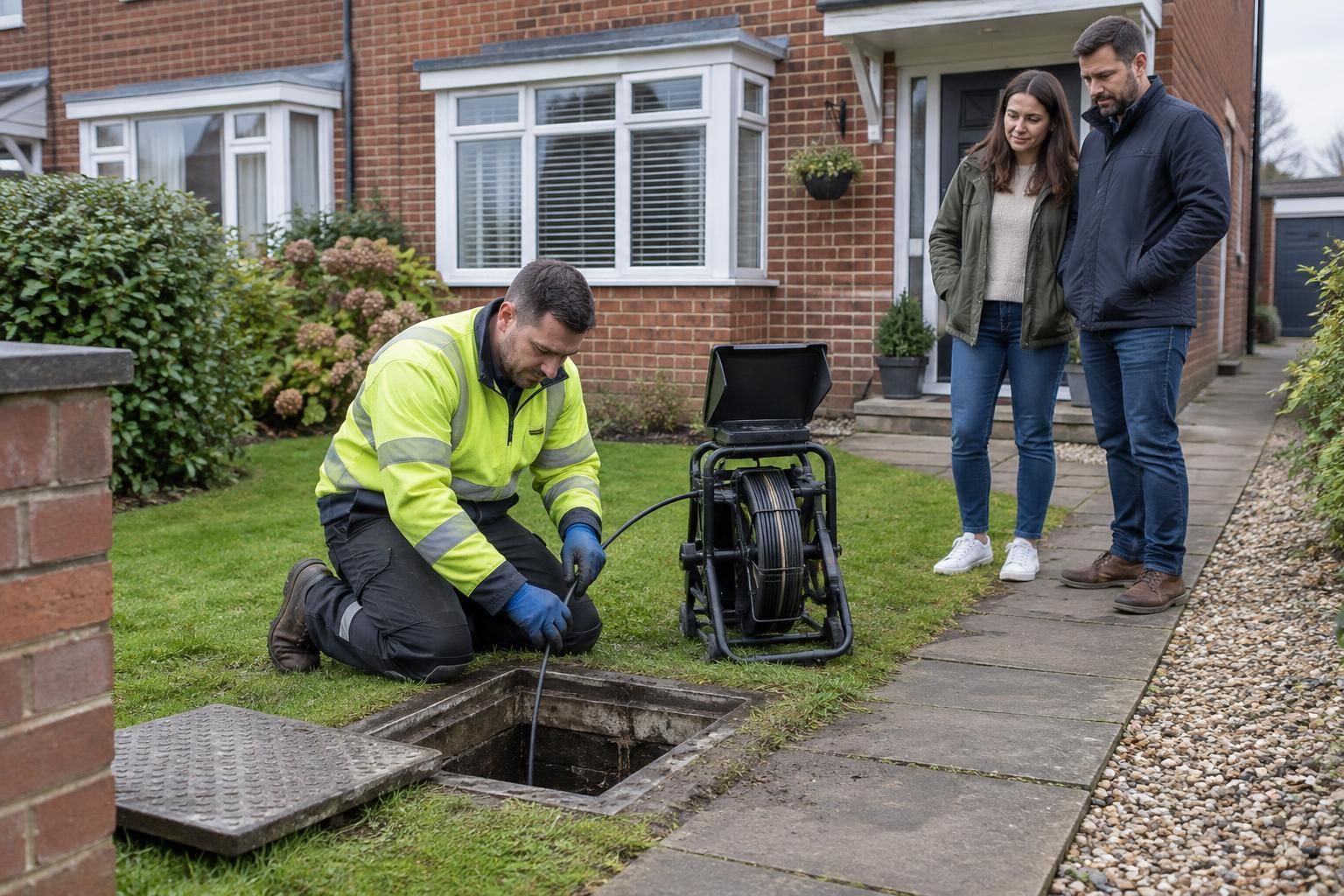
A single sign may be minor, but two or more together point to a partial blockage that will worsen under load. In that situation, a CCTV drain survey shows what is inside the pipe, whether that is grease, wipes, tree roots or a damaged section, so the repair is based on evidence rather than guesswork.
How Professional Drain Cleaning Prepares a Building
High-pressure water jetting is the standard method for clearing grease and debris from commercial drain lines, because the water scours the pipe wall rather than just pushing a blockage further along. Done before the party season, it restores the full bore of the pipe so that the system starts the busy weeks as clean as possible.
Our commercial drain cleaning services are built around this kind of planned visit. We can combine jetting with a camera inspection, so any cracked or displaced section is recorded and can be repaired at a quiet time of year. Our related guide, the drain maintenance checklist for commercial premises, sets out what to check daily, monthly and seasonally.
A Sensible Pre-Christmas Routine
- Check the diary and list the dates when the building will be busiest.
- Book grease trap emptying and drain jetting for a week or two before the first event.
- Ask for a camera survey if the building has had slow drains or odours this year.
- Brief cleaners, caterers and reception staff on what must not go down sinks and toilets.
- Keep our contact details at reception so a blockage can be reported at once.
Planning for Landlords and Property Managers
In multi-tenant buildings, a blockage is rarely contained to one unit. A grease blockage from a ground floor kitchen can back up into the toilets above, and the person who first notices the problem is often not the person who caused it. Landlords and property managers do well to put drain care in the lease and house rules, so every tenant knows what is expected.
Our guide on commercial drainage for property managers and landlords covers how to split responsibility between tenants and the building owner. A short notice to tenants in late November, reminding them about grease and wipes, costs almost nothing and avoids a lot of disputes.
What to Do if a Drain Blocks During an Event
If a blockage appears while guests are in the building, act quickly and calmly. Stop using the affected fixtures, close the toilets or kitchen sinks involved and keep people away from any overflowing water. Do not pour chemicals into the drain, since they rarely clear a hard grease blockage and can create a hazard for the engineer who arrives to deal with it.
Water that is rising from a manhole or floor drain should be reported at once, because it may mean the main line is blocked and not just a single fixture. Our team is available around the clock, so a problem that appears late on a Friday evening does not have to wait until Monday.
Keeping Commercial Drains Clear Through the Festive Season
Commercial drains at Christmas stay clear when a business plans for the extra load rather than reacting to it. Empty the grease trap, clear the lines, brief your staff and keep a professional contact to hand, and the party calendar becomes far less risky for a Dublin or Kildare workplace.
If you would like us to check your pipework before the busy weeks, contact our team to book a visit. You can also phone us on (01) 505 9494 or email info@drainmedic.ie, and we will arrange a time that suits your building.

Why Commercial Drains at Christmas Come Under Extra Pressure
Commercial drains at Christmas take far more food waste, grease and toilet use than usual, so blockages become likely. The best protection is to empty grease traps, jet the lines and brief staff before the first party. We help Dublin and Kildare workplaces with this every winter.
This guide explains what changes in a workplace during the festive season, where the weak points usually are, and what a business can do to keep drains flowing through the party calendar. It also covers the warning signs that mean it is time to bring in a professional drainage team.
What Changes in the Building During Party Season
The pipes do not change in December, but the way the building is used does. A staff lunch for sixty people puts a full day of toilet use, hand washing and kitchen waste through the drains in a few hours. Visitors who do not know the building also tend to treat sinks and toilets more casually than the people who work there every day.
Older commercial premises in Dublin are often connected to drains that were sized for lighter use, and units that have been split into several tenancies may share one run of pipe. When several tenants hold parties in the same week, that shared pipework carries a peak load it rarely sees. Cold weather can also make fats in the pipe set harder and cling to the walls rather than flush through.
Grease and Food Waste From Catered Events
Catered food is the biggest single cause of festive blockages in commercial buildings. Gravy, cooking oil, sauces, cream and the fat from roast meats all go down the kitchen sink at some point in the day, and they cool and thicken as they travel along the pipe. Over a few weeks this builds into a hard layer that narrows the pipe until water backs up.
Premises with a kitchen or canteen should have a grease trap, and it needs to be emptied on schedule rather than when it overflows. A trap that is already close to full in early December will not cope with party-season volume. Our grease trap cleaning service clears the trap and lets us note its condition before the busy period starts.
Simple Rules for Kitchen Staff and Caterers
- Scrape plates and trays into the food waste bin before they reach the sink.
- Pour used cooking oil and fat into a container, let it cool and dispose of it with general waste, never down the drain.
- Wipe greasy pans with kitchen paper before washing them.
- Fit a sink strainer and empty it into the bin after every service.
- Tell external caterers where the grease trap is and how the building expects them to handle waste.
Toilet Blockages and Items That Should Never Be Flushed
Toilet blockages rise when a large number of people use the same facilities in a short space of time. Wet wipes are the most common culprit, followed by paper towels, sanitary products and cotton buds. Even wipes sold as flushable do not break down the way toilet paper does, and they gather into dense masses where pipes bend or join.
Clear signs on cubicle doors and a covered bin in every toilet make a real difference, particularly in unisex facilities where bins may be missing. Hand towels are another hidden problem, since paper towels dropped into a toilet by a guest can block a line within a day. If the building has a sanitary bin supplier, check that visits fit around the party dates.
Warning Signs of a Commercial Drain Under Strain
Most drain failures give some warning before they turn into an emergency. Spotting these signs early gives a facilities manager time to book a visit rather than pay for an urgent call-out in the middle of an event. The most common signs are:
- Water in sinks or floor drains that drains slowly or gurgles when another fixture is used.
- A sour or sewer smell around the kitchen, toilets or an external manhole.
- Toilets that flush weakly or take several attempts to clear.
- Water rising in a gully or a manhole after heavy use.
- Damp patches or staining on floors near drain runs.
A single sign may be minor, but two or more together point to a partial blockage that will worsen under load. In that situation, a CCTV drain survey shows what is inside the pipe, whether that is grease, wipes, tree roots or a damaged section, so the repair is based on evidence rather than guesswork.
How Professional Drain Cleaning Prepares a Building
High-pressure water jetting is the standard method for clearing grease and debris from commercial drain lines, because the water scours the pipe wall rather than just pushing a blockage further along. Done before the party season, it restores the full bore of the pipe so that the system starts the busy weeks as clean as possible.
Our commercial drain cleaning services are built around this kind of planned visit. We can combine jetting with a camera inspection, so any cracked or displaced section is recorded and can be repaired at a quiet time of year. Our related guide, the drain maintenance checklist for commercial premises, sets out what to check daily, monthly and seasonally.
A Sensible Pre-Christmas Routine
- Check the diary and list the dates when the building will be busiest.
- Book grease trap emptying and drain jetting for a week or two before the first event.
- Ask for a camera survey if the building has had slow drains or odours this year.
- Brief cleaners, caterers and reception staff on what must not go down sinks and toilets.
- Keep our contact details at reception so a blockage can be reported at once.
Planning for Landlords and Property Managers
In multi-tenant buildings, a blockage is rarely contained to one unit. A grease blockage from a ground floor kitchen can back up into the toilets above, and the person who first notices the problem is often not the person who caused it. Landlords and property managers do well to put drain care in the lease and house rules, so every tenant knows what is expected.
Our guide on commercial drainage for property managers and landlords covers how to split responsibility between tenants and the building owner. A short notice to tenants in late November, reminding them about grease and wipes, costs almost nothing and avoids a lot of disputes.
What to Do if a Drain Blocks During an Event
If a blockage appears while guests are in the building, act quickly and calmly. Stop using the affected fixtures, close the toilets or kitchen sinks involved and keep people away from any overflowing water. Do not pour chemicals into the drain, since they rarely clear a hard grease blockage and can create a hazard for the engineer who arrives to deal with it.
Water that is rising from a manhole or floor drain should be reported at once, because it may mean the main line is blocked and not just a single fixture. Our team is available around the clock, so a problem that appears late on a Friday evening does not have to wait until Monday.
Keeping Commercial Drains Clear Through the Festive Season
Commercial drains at Christmas stay clear when a business plans for the extra load rather than reacting to it. Empty the grease trap, clear the lines, brief your staff and keep a professional contact to hand, and the party calendar becomes far less risky for a Dublin or Kildare workplace.
If you would like us to check your pipework before the busy weeks, contact our team to book a visit. You can also phone us on (01) 505 9494 or email info@drainmedic.ie, and we will arrange a time that suits your building.
