

Tree Roots in Drains: How to Spot the Warning Signs Early
You're standing in the garden after a downpour and the same patch of lawn is soggy again, or the toilet is gurgling for no obvious reason. Before you assume it's just another blockage, it's worth asking a different question: could tree roots be growing into your drains? It's one of the most common, and most overlooked, causes of recurring drainage problems in Dublin gardens, especially in older estates with mature trees and clay pipework.
Root intrusion tends to build slowly, which is exactly why it catches homeowners out. By the time a drain fully blocks, roots may have been growing into the pipe for years. In this guide, we'll walk through how roots actually get into your drains in the first place, the early warning signs worth watching for, why the problem only gets worse with time, and how Drain Medic tracks down and fixes root damage without unnecessary excavation.
1. How Tree Roots Get Into Your Drains
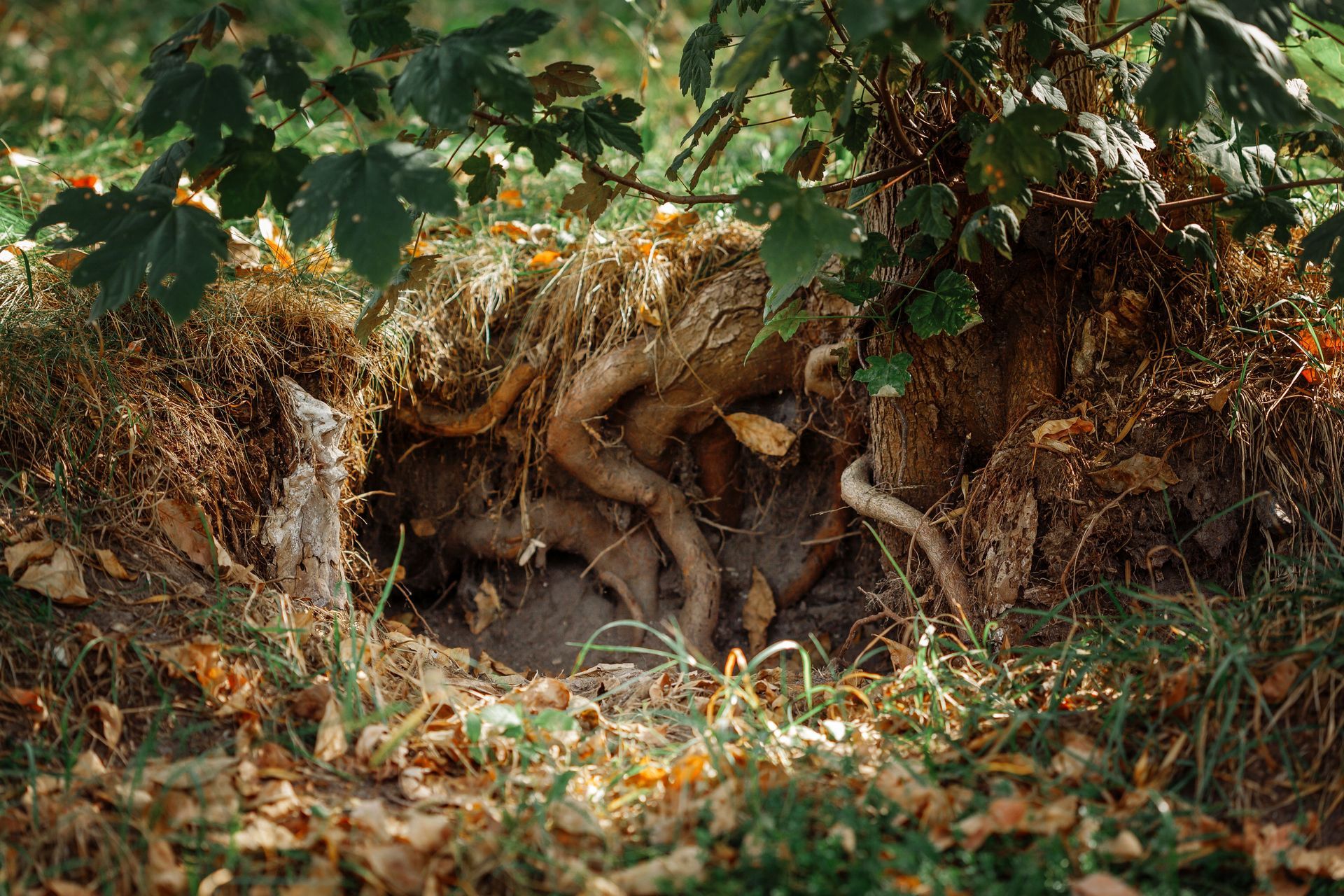
Roots don't smash through solid pipework the way people often imagine. Instead, they exploit what's already there. A hairline crack, a slightly open joint, or a small amount of movement in older clay or concrete pipes is enough to let moisture and warmth escape into the surrounding soil. Roots are drawn straight toward that combination, because a leaking drain is, in effect, a constant water source.
Once a fine root finds its way in, it doesn't stop. It thickens over months and years, wedging the original crack wider and creating more space for further roots to follow. This is why root problems are so common near mature trees, hedgerows, and even large shrubs planted close to the drain run. Properties built before the 1970s, with their older clay pipe networks, are particularly exposed, though modern plastic pipework isn't completely immune if joints have shifted slightly over time.
Willows, poplars, and sycamores are especially notorious for aggressive root systems that seek out moisture, but almost any tree or large shrub within a few metres of a drain run can be a factor. It's also worth remembering that the roots causing the problem don't have to be on your own property. A neighbour's tree, or one on a shared boundary, can send roots well beyond the garden it's actually planted in.
2. Early Warning Signs to Watch For
Have you noticed a patch of grass that's always greener or wetter than the rest of the lawn, even in dry weather? That's often one of the earliest clues, because a leaking drain effectively fertilises and waters the ground above it. Gurgling sounds from toilets or sinks, slow-draining water that never quite improves, and a faint sewage smell near a particular part of the garden are all worth taking seriously too.
Recurring blockages are another giveaway. If you've had the same sink or outside gully unblocked more than once in a year, and the problem always comes back in roughly the same spot, roots are a likely culprit rather than the usual culprits like wipes or grease. Cracked paving or a slightly sunken section of path near a drain run can also hint at movement below the surface.
3. Why Ignoring It Makes the Problem Worse
Root intrusion is a problem that compounds. What starts as a fine root hair capable of slowing water flow can, within a couple of seasons, become a dense root mass that stops the pipe almost entirely. Each blockage puts more pressure on the surrounding joint, and the pipe itself can crack further or collapse under the weight of the soil and root system pressing in from outside.
Left unchecked, this doesn't just mean more frequent call-outs. A collapsed drain run can mean digging up a driveway, patio, or section of garden that could otherwise have been avoided with an earlier repair. Sewage escaping into the surrounding soil is also a genuine health and environmental concern, and it's the kind of issue Irish Water and local authorities take seriously if it affects a shared or public drain.
4. How Drain Medic Diagnoses and Fixes Root Damage
The first step is always finding out exactly what's happening underground, and that starts with a CCTV drain survey. Our engineers feed a camera through the affected pipework to see precisely where roots have entered, how much damage has been done to the pipe, and whether the issue is isolated or spread across several joints. This lets us recommend the right fix rather than guessing.
For many root intrusions, high-pressure water jetting clears the immediate blockage and cuts back root growth without any digging at all. Where the pipe itself is cracked or has lost its shape, no-dig drain relining can restore a smooth, sealed pipe from the inside, sealing off the entry points roots were using. Excavation is only ever used where the damage is too severe for these methods, so most gardens and driveways stay untouched.
Regular CCTV checks every few years, particularly on older properties with nearby trees, catch this kind of damage while it's still a simple fix rather than an expensive one. Where a tree itself is the ongoing source of the problem, we can also advise on practical next steps, whether that's root barrier installation or simply flagging it so you can make an informed decision about the planting nearby.
Conclusion
Tree roots in drains rarely announce themselves clearly until the damage is well underway, which is exactly why the early signs, a soggy patch of lawn, gurgling pipes, or a blockage that keeps coming back, deserve a proper look rather than a temporary fix. Catching root intrusion early with a CCTV survey almost always means a simpler, less disruptive repair, and a drain that keeps flowing the way it should.
If any of these signs sound familiar, don't wait for a full blockage or a collapsed pipe to force the issue. Call Drain Medic on (01) 505 9494 or email info@drainmedic.ie and our team will get a camera down there, tell you exactly what's going on, and fix it the right way the first time.